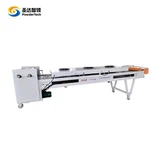
Ensuring uniform air intake in an air cooling belt conveyor is crucial for achieving efficient and consistent cooling performance. As a leading supplier of Air Cooling Belt Conveyor, we understand the challenges that come with maintaining uniform air distribution. In this blog post, we will explore various strategies and techniques to ensure uniform air intake in your air cooling belt conveyor.
Understanding the Importance of Uniform Air Intake
Uniform air intake is essential for several reasons. Firstly, it ensures that all parts of the material being conveyed on the belt are cooled evenly. Uneven cooling can lead to variations in product quality, such as differences in hardness, density, or surface finish. Secondly, uniform air intake helps to optimize the energy efficiency of the cooling process. When air is distributed evenly, the cooling system can operate more effectively, reducing the amount of energy required to achieve the desired cooling effect. Finally, consistent air intake can extend the lifespan of the conveyor belt and other components of the cooling system by minimizing thermal stress and wear.
Factors Affecting Air Intake Uniformity
Before we discuss the strategies for ensuring uniform air intake, it's important to understand the factors that can affect it. Some of the key factors include:
- Conveyor Design: The design of the conveyor, including the shape and size of the air intake ducts, the placement of the fans, and the layout of the belt, can have a significant impact on air intake uniformity. For example, if the air intake ducts are too narrow or have sharp bends, it can cause air flow restrictions and uneven distribution.
- Fan Performance: The performance of the fans used in the cooling system, such as their capacity, efficiency, and airflow pattern, can also affect air intake uniformity. If the fans are not properly sized or installed, they may not be able to provide sufficient air flow or distribute it evenly across the conveyor belt.
- Material Characteristics: The characteristics of the material being conveyed, such as its density, particle size, and moisture content, can influence the way air flows around and through it. For instance, a dense or fine-grained material may impede air flow more than a light or coarse-grained material.
- Environmental Conditions: The environmental conditions in which the conveyor operates, such as temperature, humidity, and air pressure, can also affect air intake uniformity. Changes in these conditions can alter the density and viscosity of the air, which can in turn affect the performance of the cooling system.
Strategies for Ensuring Uniform Air Intake
Optimize Conveyor Design
- Air Intake Duct Design: Design the air intake ducts to have a smooth and uniform cross-section to minimize air flow resistance. Avoid sharp bends and constrictions, and use gradual transitions to ensure a consistent flow of air. Additionally, consider using diffusers or baffles at the air intake to help distribute the air more evenly.
- Fan Placement: Properly position the fans to ensure that they provide a balanced and uniform air flow across the conveyor belt. Place the fans at regular intervals along the length of the conveyor and at an appropriate height to ensure that the air reaches all parts of the belt. Consider using multiple fans with different capacities or airflow patterns to achieve better air distribution.
- Belt Layout: The layout of the conveyor belt can also affect air intake uniformity. Ensure that the belt is properly tensioned and aligned to prevent sagging or misalignment, which can create uneven gaps between the belt and the air intake ducts. Additionally, consider using a perforated or mesh belt to allow air to pass through more easily and improve cooling efficiency.
Select the Right Fans
- Fan Capacity: Choose fans with a sufficient capacity to provide the required air flow for the cooling process. Consider factors such as the size of the conveyor, the type of material being conveyed, and the desired cooling rate when selecting the fan capacity.
- Fan Efficiency: Select fans that are energy-efficient to reduce operating costs. Look for fans with high efficiency ratings and advanced features such as variable speed drives or aerodynamic blade designs.
- Airflow Pattern: Consider the airflow pattern of the fans when selecting them. Some fans are designed to provide a focused or directional airflow, while others are designed to provide a more diffuse or uniform airflow. Choose the airflow pattern that is most suitable for your application to ensure uniform air intake.
Manage Material Characteristics
- Material Preparation: If possible, prepare the material before it is conveyed to improve its air permeability. This may involve processes such as sieving, drying, or pelletizing to reduce the density or moisture content of the material and make it easier for air to flow through it.
- Material Distribution: Ensure that the material is evenly distributed across the conveyor belt to prevent uneven air flow. Use a feeder or distributor to spread the material evenly and avoid creating piles or clumps that can impede air flow.
Monitor and Control Environmental Conditions
- Temperature and Humidity Control: Maintain stable temperature and humidity conditions in the area where the conveyor operates to ensure consistent air intake. Use heating or cooling systems as needed to control the temperature, and dehumidifiers or humidifiers to control the humidity.
- Air Pressure Regulation: Monitor and regulate the air pressure in the cooling system to ensure that it is within the desired range. Use pressure sensors and control valves to adjust the air pressure as needed and prevent air flow fluctuations.
Regular Maintenance and Inspection
Regular maintenance and inspection of the air cooling belt conveyor and its components are essential for ensuring uniform air intake. Some of the key maintenance tasks include:
- Cleaning: Regularly clean the air intake ducts, fans, and conveyor belt to remove any dust, debris, or other contaminants that can accumulate and affect air flow. Use appropriate cleaning tools and techniques to ensure that the components are thoroughly cleaned without causing damage.
- Lubrication: Lubricate the moving parts of the conveyor, such as the bearings and drive shafts, to reduce friction and wear. Follow the manufacturer's recommendations for lubrication intervals and use the appropriate lubricants.
- Alignment and Tensioning: Check the alignment and tension of the conveyor belt regularly to ensure that it is properly positioned and running smoothly. Adjust the tension as needed to prevent sagging or misalignment, which can affect air intake uniformity.
- Fan Maintenance: Inspect the fans regularly for signs of wear, damage, or malfunction. Clean the fan blades and motors, and replace any worn or damaged parts as needed. Additionally, check the fan belts or couplings for proper tension and alignment.
Conclusion
Ensuring uniform air intake in an air cooling belt conveyor is essential for achieving efficient and consistent cooling performance. By understanding the factors that affect air intake uniformity and implementing the strategies outlined in this blog post, you can optimize the design and operation of your air cooling belt conveyor to ensure uniform air distribution and improve product quality.
If you are interested in learning more about our Air Cooling Belt Conveyor or Powder Coating Equipment Air Cooling Belt, or if you have any questions about ensuring uniform air intake in your cooling system, please do not hesitate to contact us. Our team of experts is available to provide you with more information and assist you in selecting the right equipment for your application. We look forward to the opportunity to work with you and help you achieve your cooling goals.


References
- Perry, R. H., & Green, D. W. (Eds.). (2008). Perry's Chemical Engineers' Handbook. McGraw-Hill.
- Cengel, Y. A., & Cimbala, J. M. (2014). Fluid Mechanics: Fundamentals and Applications. McGraw-Hill.
- ASHRAE Handbook - Fundamentals. (2017). American Society of Heating, Refrigerating and Air-Conditioning Engineers.