


Cooling Belt
Qingdao Shengda Leading Machinery Tech Co., Ltd is(SDL) the export company of (S.S.D) Shandong Shengshida Tecnnology Co., Ltd.,SSD was established in 2005 and listed on the stock in 2015 (NEW Three Board)
SDL is committed to delivering sustainable, trustworthy, and reliable powder machinery and powder raw materials such as epoxy resin and polyester resin. We have been serving the industry for over 15 years, and our experience makes us a prominent manufacturer and supplier. Our top priority is customer satisfaction, and we strive to provide exceptional service and competitive pricing, establishing long-term partnerships with our clients for more than 30 countries. Our dedication to quality and eco-friendliness ensures that our customers receive nothing but the best. Let SDL be your reliable partner; we are here to help you succeed.
-
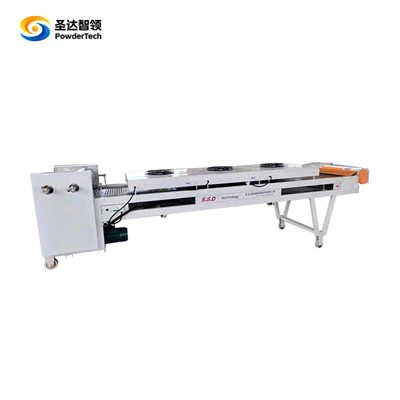
 Powder Coating Equipment Air Cooling BeltThe Powder Coating Equipment Air Cooling Belt is an essential component in the production line for cooling extruded material.Add to Inquiry
 -
 Air Cooling Belt ConveyorThe Air Cooling Belt Conveyor is an essential component of the tablet compression system. It is composed of a cooling roller, a stainless steel conveyor belt, and a crushing and air-cooling system.Add to Inquiry
 -
 Powder Coating CrusherWith its compact design, it occupies minimal area while still providing maximum output.Add to Inquiry
 -
 Powder Coatings Air Cooling Belt ConveyorThe Powder Coatings Air Cooling Belt Conveyor plays a crucial role in the manufacturing process as it allows the extruded materials to cool down quickly without the need for water contact.Add to Inquiry


Why Choose Us
Patent Certification
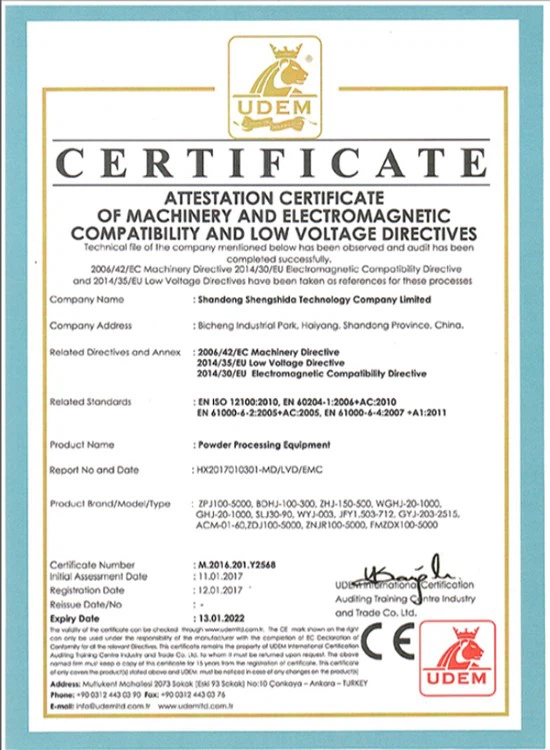
The company has 77 valid patents, 1 computer software copyright and intellectual property system certification, ISO9001 certification, ISO14001 certification, CE certification, explosion-proof certification, dual-soft certification and many other certifications.
Excellent Service
Our top priority is customer satisfaction, and we strive to provide exceptional service and competitive pricing, establishing long-term partnerships with our clients for more than 30 countries. Our dedication to quality and eco-friendliness ensures that our customers receive nothing but the best.
Rich Experience
We have been serving the industry for over 15 years, and our experience makes us a prominent manufacturer and supplier.
High-Tech Enterprise
The company is a national high-tech enterprise integrating research, design, manufacture of powder machinery and providing integrated solutions for powder production lines.
|
Model |
Belt Effective Length (mm) |
Belt Effective Width (mm) |
Output(kg/h) |
Main Power(kW) |
Dimension(mm) |
|
YPW-526 |
2600 |
500 |
50-100 |
0.55-0.75 |
4000×1200×1600 |
|
YPW-640 |
4000 |
600 |
120-180 |
1.1-1.5 |
5000×1300×1600 |
|
YPW-850 |
5000 |
800 |
200-300 |
1.5-2.2 |
6000×1500×1800 |
|
YPW-1070 |
7000 |
1000 |
350-600 |
1.5-2.2 |
8000×1700×2000 |
|
YPW-1270 |
7000 |
1200 |
700-800 |
2.2-3.0 |
8000×1900×2000 |
|
YPW-1570 |
7000 |
1200 |
900-1000 |
3.0-5.5 |
8000×2100×2000 |
Steel belts: Used for the production of chemicals, bakers products, food, decorative laminates, wood-based panels, films, membranes, and cast sheets.
Foam rubber: Used as insulation in cooling hoods.
Polyester fabric: Used as filters in cooling hoods.
Transparent polycarbonate: Used as inspection windows in cooling hoods.
Copper tubes: Used as heat exchangers in cooling hoods.

Advantages of Cooling Belt
High efficiency and energy saving: The cooling belt is made of high-strength material, which can withstand high-intensity working load, and at the same time, it has good thermal conductivity, which can quickly cool down the material. Compared with the traditional conveyor belt, the cooling belt can not only improve the production efficiency, but also save a lot of energy cost.
Environmentally friendly and healthy: Cooling belt is made of non-toxic, odourless and environmentally friendly materials, which will not pollute the food and other materials, and will not cause harm to human health. The use of cooling belt can guarantee the environmental protection and health of the production process.
Long service life: The cooling belt is made of high quality material with good abrasion resistance and corrosion resistance, which can withstand long-term use and friction, and has a long service life. Compared with traditional conveyor belts, cooling belts also have lower maintenance costs.
Wide range of applications: Cooling belts are suitable for a wide range of industries, including food processing, chemical industry, etc. In the food processing industry, cooling belts are used in a wide range of industries. In the food processing industry, cooling belts are used in food cooling and drying processes to ensure food quality and safety; in the chemical industry, cooling belts are used to cool high temperature materials to ensure environmental protection and high efficiency of the production process.

• High quality imported stainless steel belt, able to work
• Under dynamic tension and variable temperature in the long run
• Adjustable thickness of chips and speed of roller,
• Homogeneous chip size
• Material cooled by clean chilled water to avoid contamination
High productivity
• Both sides of the frame are equipped with guyed emergency stop switches, the cooling roller is equipped with reverse rotation function
• Comprehensive safety protection system
Easy to clean and maintain
• Easy to clean and maintain
• Cooling rollers can be adjusted by butterfly spring for effective protection
• Noise: ≤ 70 dB
Electronic products Cooling strip is often used as heat dissipation spacer in electronic products, which can effectively reduce the working temperature of electronic equipment and improve the working efficiency and service life of the equipment.
Automobile industry In the automobile industry, the cooling belt can be used as a heat dissipation gasket and heat insulation material to prevent the engine, transmission system and other components from overheating, so as to maintain the normal working condition of the car.
Aerospace In the aerospace industry, cooling belts are used in a variety of application scenarios such as heat dissipation, fire resistance, flame retardant and thermal insulation to ensure stable operation and safety of equipment.
Data centre With the development of information technology, data centres require efficient cooling systems to ensure the safe and efficient operation of data processing equipment. Cooling belts play a key role in data centres, ensuring the stability and life of the system through precise temperature control.
Plastic moulding industry
In the plastic moulding process, cooling belts provide stable cooling capacity to speed up the moulding cycle and improve productivity.
Laser cutting and Welding
In laser cutting and welding technology, cooling belts are used to reduce the temperature of the working area, protect the equipment and improve the processing quality.
Precision instruments
In electronics manufacturing and research laboratories, cooling belts provide a stable temperature environment for precision instruments to ensure optimum performance.
Our Certificate


Our Services
Our top priority is customer satisfaction, and we strive to provide exceptional service and establishing long-term partnerships with our clients for more than 30 countries. Our dedication to quality and eco-friendliness ensures that our customers receive nothing but the best. Let SDL be your reliable partner; we are here to help you succeed.
We Promise :
1. Efficient response within 48 hours.
2. Technical Support.
3. Installation and commissioning Services available when required.
4. Record Installation Video , Download Or Watch For Free In The Future.
5. Upgrading service offered.
FAQ
As one of the leading cooling belt manufacturers and suppliers in China, we warmly welcome you to buy advanced cooling belt from our factory. All equipment are with high quality and competitive price.
