


Grinding Mill
Patent Certification
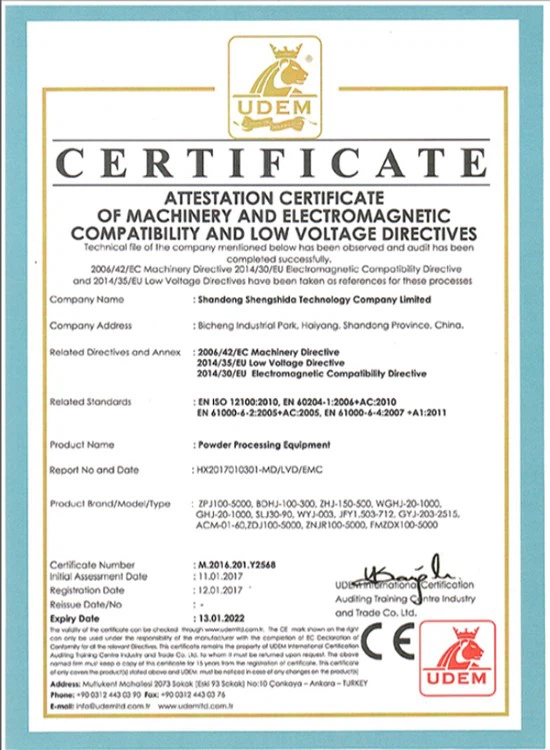
The company has 77 valid patents, 1 computer software copyright and intellectual property system certification, ISO9001 certification, ISO14001 certification, CE certification, explosion-proof certification, dual-soft certification and many other certifications.
Rich Experience
We have been serving the industry for over 15 years, and our experience makes us a prominent manufacturer and supplier.
Excellent Service
Our top priority is customer satisfaction, and we strive to provide exceptional service and competitive pricing, establishing long-term partnerships with our clients for more than 30 countries. Our dedication to quality and eco-friendliness ensures that our customers receive nothing but the best.
High-Tech Enterprise
The company is a national high-tech enterprise integrating research, design, manufacture of powder machinery and providing integrated solutions for powder production lines, the products mainly include mixers, extruders, cooling belts and grinding mills.The sales volume of the company's equipment &production line have been awarded rank No.1 by National Powder Coating Industry Center, and actively participate in the formulation of industry standards.
-
 Powder Coatings Grinder MillThe Powder Coatings Grinder Mill is a high-performance product that is designed to deliver reliable and consistent results.Add to Inquiry
 -
 Powder Coating Grinding MillThe Powder Coating Grinding Mill is composed of high-speed air classification mill, cyclone separator, rotating screen (vibrating screen), ultrafine dust collecting box and fan.Add to Inquiry
 -
 Powder Coating Grinder MachineryThe Powder Coating Grinder Machinery is a highly efficient and reliable system that is designed to meet the highest safety standards in the industry.Add to Inquiry


Grinding mills are mechanical devices used to break down solid materials into smaller particles through the process of grinding. They are widely used in various industries, including mining, construction, pharmaceuticals, and food processing. Grinding mills come in different types, such as ball mills, rod mills, and vertical mills, each designed for specific applications.
Advantages of Grinding Mill
Enhanced productivity
Modern grinding mills are designed to process large volumes of material quickly and efficiently, leading to significant improvements in productivity and output.
Improved quality
The ability to control the particle size of the ground material allows manufacturers to produce uniform, high-quality products that meet stringent industry standards.
Waste reduction
Grinding mills can help convert waste materials into valuable resources, reducing the environmental impact of industrial processes.
Energy efficiency
Advances in grinding mill technology have led to the development of energy-efficient machines that can perform the same tasks with lower energy consumption, minimizing costs and environmental impact.
Types of Grinding Mills
Grinding mills can be categorized into several types, each designed for specific purposes and applications. Some of the most common types include:
Ball mills
These cylindrical mills use steel balls or rods as grinding media and are often employed in the mining industry for grinding ores into fine powders.
Hammer mills
Commonly used in food processing and agricultural industries, hammer mills use hammers attached to a spinning rotor to crush and grind materials into smaller particles.
Attrition mills
These mills utilize the principle of attrition, where particles are ground against each other or against a surface, resulting in size reduction. They are often used for fine grinding of food products, chemicals, and minerals.
Vertical roller mills
These large-scale mills are primarily used in the cement and power industries for grinding raw materials, coal, and clinker into fine particles.
Industry Applications of Grinding Mills
Cement manufacturing: Grinding mills are used to grind clinker, which is a raw material used in cement production, into a fine powder. This powder is then used to produce cement.
Paint and coatings manufacturing: Grinding mills are used to grind pigments and other raw materials used in the manufacture of paints and coatings.
Pharmaceutical manufacturing: Grinding mills are used to grind active pharmaceutical ingredients (APIs) and other materials used in the production of drugs and medications.
Chemical manufacturing: Grinding mills are used to grind and blend various chemicals, such as fertilizers, pesticides, and other industrial chemicals.
Food processing: Grinding mills are used to grind grains, spices, and other ingredients used in the production of food products, such as flour, sugar, and spices.
Recycling: Grinding mills are used to grind and shred various materials for recycling purposes, such as plastic, wood, and metal.
Main Features of Grinding Mill
Grinding mechanism
Grinding mill use mechanical force, such as impact, compression, or attrition, to break down materials into smaller particles.
Energy efficiency
Modern grinding mills are designed to be energy-efficient, reducing energy consumption and operating costs.
Particle size control
Grinding mills allow precise control over the final particle size distribution of the ground material, which is important in various industries, such as the production of cement, pigments, and pharmaceuticals.
Versatility
Grinding mills can handle a wide range of materials, from soft to hard and from dry to wet.
Batch or continuous operation
Grinding mills can be operated in batch mode, processing a fixed amount of material at a time, or continuously, with a continuous feed and discharge system.
Milling media
Some grinding mills use grinding media, such as steel balls or ceramic beads, to aid in the grinding process and achieve the desired particle size reduction.
Some Characteristics and Requirements to Consider When Choosing a Grinding Mill


• Material properties – The choice of mill type is primarily dependent upon the properties of the material which is to be ground by it. It is vitally important to match the mill and material characteristics properly.
• Capacity – The scale of the operation determines the size of the mill which is required. Throughput or capacity is often given in tons per hour ( kg per hour for small mills).
• Reduction ratio and final size requirement –This parameter decides whether a single mill is sufficient for final product requirements or if a multi stage grinding plant is be needed. Normally greater the reduction ratio, the larger is the likelihood for a multi stage process.
• Power requirements and type of power supply – Access to a power supply of suitable capacity is essential. The power requirement for a grinding mill is normally given in the mill specification document. Specific power consumption ( kWh per ton) is good comparative guide.
• Wet or dry product – Products which can be accepted in a wet state, such as slurries, can be milled wet which save power and reduce dust related problems. As a general rule, only tumbling mills are used for wet grinding, although other mills can be used for wet grinding in certain circumstances.
• Continuous or batch operation – Some mills can be designed in such a way as to enable continuous milling. This is important where the throughput is high, as well as making loading and emptying easier within the process. Some mills will only accept batch loads.
• Portable or stationary equipment required – Depending on the nature of the operation, the equipment can be installed permanently or can be portable. Portable equipment is useful for operations which move frequently to the dispersed sites.
• Classification – When considering a mill for a particular application, one needs to consider the classification mechanism that is needed for the process.
• Cost – Obviously cost is an important factor. It is important to consider all the costs which include (i) capital costs of the mill, (ii) capital costs of peripherals, (iii) transport costs, (iv) operating costs, and (v) maintenance costs
Importance of Grinding Mills in Mineral Refining
The main function of grinding mills is to minimize the size of the rock particles to a size that can be further reused. The process of grinding includes the use of a grinding medium, which is often a ball or a rod. The grinding medium is rotated inside the mill, leading the rock particles to be crushed and ground to a fine powder.
Grinding mills are essential in mineral processing procedures because they are responsible for crushing and grinding the rocks into fine particles. The size of the particles is important since it decides the capability of the further processing steps. If the particles are too large, they may not be fully refined, but if they are too small, the capability of the process may be decreased.
The efficiency of grinding mills is also important in terms of consuming the energy. Grinding mills takes a large amount of energy during the procedures, and enhancing their operation Is important to decrease energy consumption and costs.
Maintenance of Grinding Mill
Regular inspection and maintenance
Regular inspection and maintenance can prevent potential problems and ensure the normal operation of the equipment. The inspection and maintenance items include checking the lubrication system, tightening the bolts and nuts, checking the wear of the grinding roller and the grinding ring, and replacing the damaged parts in time. In addition, the operators should inspect the equipment before and after each shift and perform regular maintenance tasks as recommended by the manufacturer.
Lubrication system maintenance
The lubrication system is an important part of the grinding mill, which can reduce the wear of the equipment and improve the service life of the equipment. Therefore, the lubrication system should be regularly checked and maintained, including adding lubricating oil, checking the oil level, and replacing the oil in time. It is important to use the recommended lubricants and follow the manufacturer's instructions for lubrication.
Regular cleaning
Regular cleaning of the grinding mill can prevent the accumulation of dust and other impurities, which can affect the efficiency and quality of the equipment. The cleaning items include cleaning the grinding chamber, the air duct, and the filter bag of the dust collector. The operators should use the recommended cleaning agents and follow the manufacturer's instructions for cleaning.
Use high-quality spare parts
High-quality spare parts can improve the performance and service life of the equipment. Therefore, it is recommended to use high-quality spare parts from the original manufacturer, which can ensure the compatibility and stability of the equipment. The operators should use genuine spare parts and avoid using inferior or counterfeit parts that may damage the equipment.
Proper operation and maintenance training
Proper operation and maintenance training can improve the skills and knowledge of the operators, which can prevent potential problems caused by improper operation or maintenance. The training should include the basic knowledge of the equipment, the operation procedures, the maintenance methods, and the safety precautions. The operators should follow the recommended operation procedures and safety precautions and report any abnormalities or malfunctions to the supervisor.
Keep records and follow up
Keeping records of the maintenance activities and the equipment's performance can help identify potential problems and improve the maintenance procedures. The operators should record the maintenance activities, including the date, time, and type of maintenance, as well as any abnormality or malfunction observed. In addition, the operators should follow up on the maintenance activities and monitor the equipment's performance to ensure the effectiveness of the maintenance procedures.
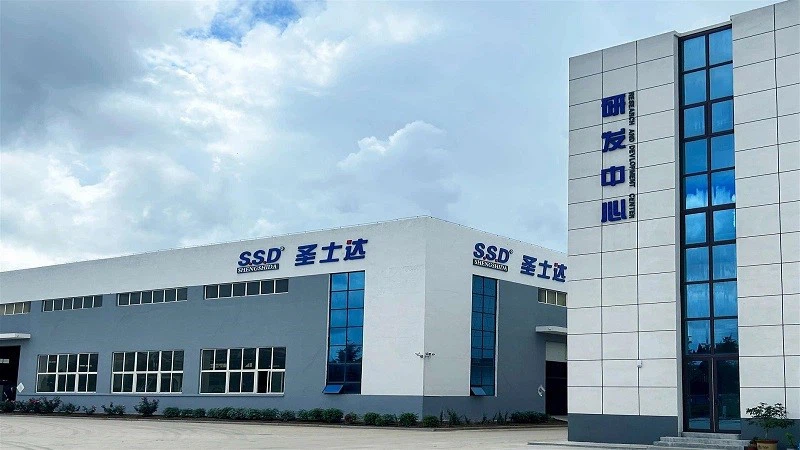
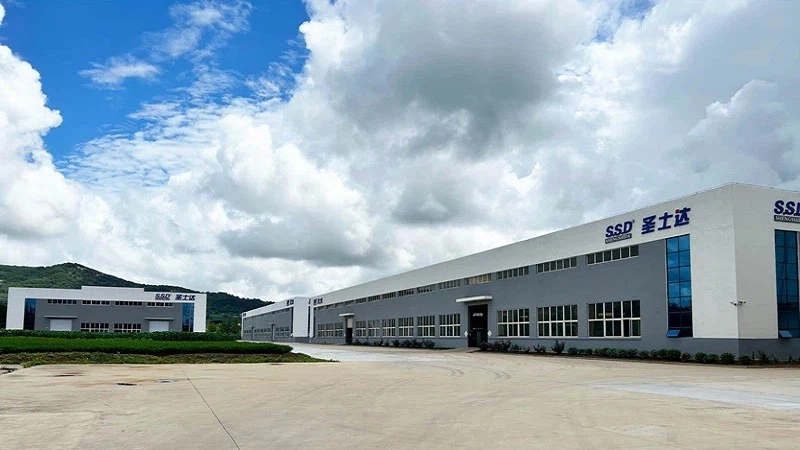
Our Factory
Qingdao Shengda Leading Machinery Tech Co., Ltd is(SDL) the export company of (S.S.D) Shandong Shengshida Tecnnology Co., Ltd.,SSD was established in 2005 and listed on the stock in 2015 (NEW Three Board)
The company is a national high-tech enterprise integrating research, design, manufacture of powder machinery and providing integrated solutions for powder production lines, the products mainly include mixers, extruders, cooling belts and grinding mills.
The sales volume of the company's equipment &production line have been awarded rank No.1 by National Powder Coating Industry Center, and actively participate in the formulation of industry standards. SDL &SSD are committed to the development of intelligent energy-saving emission reduction low-noise milling equipment and environmental dust removal equipment, our company's powder equipment has a total of nine series, fifty-eight products (automatic batching machine, mixer, metal powder bonding mixer, extruder, cooling belt, mill, automatic packaging line, laboratory powder production line, environmental dust removal equipment, coating equipment,formaldehyde-free adhesive equipment), selling in China, Europe, the United States, Russia, Japan and South Korea, the Middle East, Southea Since its establishment, the company has been based on the road of technological innovation, and has cooperated with Shandong University and Shandong University of Science and Technology in production, education and research. The company has 77 valid patents, 1 computer software copyright and intellectual property system certification, ISO9001 certification, ISO14001 certification, CE certification, explosion-proof certification, dual-soft certification and many other certifications.
SDL is committed to delivering sustainable, trustworthy, and reliable powder machinery and powder raw materials such as epoxy resin and polyester resin. We have been serving the industry for over 15 years, and our experience makes us a prominent manufacturer and supplier. Our top priority is customer satisfaction, and we strive to provide exceptional service and competitive pricing, establishing long-term partnerships with our clients for more than 30 countries. Our dedication to quality and eco-friendliness ensures that our customers receive nothing but the best. Let SDL be your reliable partner; we are here to help you succeed.
Certificate


FAQ
As one of the leading grinding mill manufacturers and suppliers in China, we warmly welcome you to buy advanced grinding mill from our factory. All equipment are with high quality and competitive price.
