Hey there! As a supplier of powder coating extruders, I often get asked about how these nifty machines work. So, I thought I'd take a few minutes to break it down for you in a way that's easy to understand.
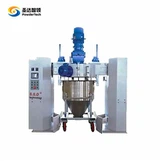
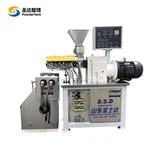
Let's start with the basics. A powder coating extruder is a key piece of equipment in the powder coating manufacturing process. It's used to mix, melt, and homogenize various raw materials to create a uniform powder coating product. The most common type of powder coating extruder is the twin-screw extruder, which comes in different configurations like the Powder Coating Double Screw Extruder Machine and the Twin Screw Extruder for Powder Coating. There's also the High Torque Twin Screw Extruder, which is designed for more demanding applications.
The Raw Material Feeding Stage
The whole process begins with the feeding of raw materials. These raw materials typically include resins, pigments, fillers, and additives. They're usually stored in hoppers and then fed into the extruder through a controlled feeding system. The feeding system ensures that the right amount of each raw material is introduced into the extruder at the correct rate. This is super important because getting the proportions right is crucial for the quality of the final powder coating product.
The Conveying and Compression Zone
Once the raw materials enter the extruder, they're first conveyed along the screw channels. The twin screws in the extruder rotate in a synchronized manner, pushing the materials forward. As the materials move forward, they enter the compression zone. In this zone, the screw design changes in such a way that it compresses the raw materials. This compression helps to remove any air pockets and starts to mix the materials more thoroughly.
The Melting and Mixing Zone
After compression, the materials reach the melting and mixing zone. This is where the real action happens! The extruder barrel is heated to a specific temperature, usually between 80°C to 130°C, depending on the type of resin used. The heat, combined with the mechanical shear force generated by the rotating screws, melts the resin. As the resin melts, it starts to coat the other raw materials like pigments and fillers.
The twin screws play a vital role in this mixing process. They have different types of screw elements, such as kneading blocks and mixing elements. These elements are designed to create a high degree of shear and mixing. They break up any agglomerates of pigments and fillers, ensuring that they're evenly dispersed throughout the molten resin. This results in a homogeneous mixture with consistent color and properties.
The Homogenization and Degassing Zone
Once the materials are melted and mixed, they move into the homogenization and degassing zone. In the homogenization part, the mixture is further refined to ensure that all the components are evenly distributed. This helps to achieve a high-quality powder coating with uniform properties.
Degassing is also an important step in this zone. During the melting and mixing process, small amounts of volatile substances may be released from the raw materials. These volatile substances can cause defects in the final powder coating if not removed. The extruder is equipped with a vent port in this zone, which allows these volatile substances to escape. The vacuum system connected to the vent port helps to draw out the gases effectively.
The Extrusion and Cooling Stage
After homogenization and degassing, the well-mixed molten mixture is ready for extrusion. The mixture is forced through a die at the end of the extruder. The die gives the extruded material a specific shape, usually in the form of a thin sheet or a strand.
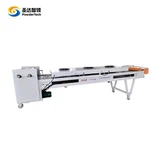
Once the material is extruded, it needs to be cooled quickly to solidify it. This is typically done using a cooling conveyor or a water bath. Cooling the extruded material rapidly helps to preserve the homogeneous structure and prevent any further chemical reactions from occurring.
The Milling and Classification Stage
After cooling, the solidified extrudate is ready for the next step, which is milling. The extrudate is crushed into small particles using a mill. The milling process reduces the particle size of the extrudate to the desired range for powder coating applications, usually between 10 to 50 micrometers.


Once the particles are milled, they go through a classification process. This process separates the particles based on their size. The particles that are within the desired size range are collected as the final powder coating product, while the oversized and undersized particles are recycled back into the process.
Why Our Powder Coating Extruders are Great
Now, you might be wondering why you should choose our powder coating extruders. Well, our extruders are designed with the latest technology and high-quality materials. They offer excellent mixing performance, which ensures a uniform and high-quality powder coating product. The temperature control system is very precise, allowing you to achieve the perfect melting point for different types of resins.
Our extruders are also very energy-efficient. They're designed to minimize heat loss and reduce power consumption, which can save you a lot of money in the long run. And we offer a wide range of models to suit different production needs, whether you're a small-scale manufacturer or a large industrial operation.
Let's Talk Business
If you're in the market for a powder coating extruder, I'd love to have a chat with you. We can discuss your specific requirements, the type of powder coating you're looking to produce, and which of our extruders would be the best fit for your business. Whether you need a standard model or a customized solution, we've got you covered. So, don't hesitate to reach out and start the conversation. We're here to help you take your powder coating production to the next level.
References
- "Extrusion of Polymers: Theory and Practice" by C. Rauwendaal
- "Powder Coatings: Chemistry and Technology" by P. K. T. Oldring