


Patent Certification
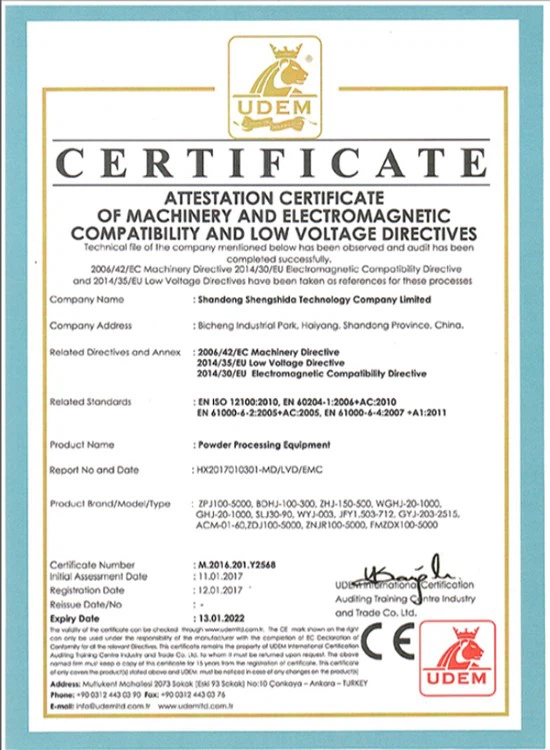
The company has 77 valid patents, 1 computer software copyright and intellectual property system certification, ISO9001 certification, ISO14001 certification, CE certification, explosion-proof certification, dual-soft certification and many other certifications.
Rich Experience
We have been serving the industry for over 15 years, and our experience makes us a prominent manufacturer and supplier.
Excellent Service
Our top priority is customer satisfaction, and we strive to provide exceptional service and competitive pricing, establishing long-term partnerships with our clients for more than 30 countries. Our dedication to quality and eco-friendliness ensures that our customers receive nothing but the best.
High-Tech Enterprise
The company is a national high-tech enterprise integrating research, design, manufacture of powder machinery and providing integrated solutions for powder production lines, the products mainly include mixers, extruders, cooling belts and grinding mills.The sales volume of the company's equipment &production line have been awarded rank No.1 by National Powder Coating Industry Center, and actively participate in the formulation of industry standards.
Container mixer is great for the careful mixing of temperature-sensitive materials which requires superlative mixing quality. An innovative mixing concept with new tools and a unique process enables mixing without temperature increase.

Metallic Bonding machinery refers to the process of pasting metal powder onto the surface of powder coating particles to form metal powder coating bonding.

The Double Cone Mixer is composed of a rotating container with two cones and two stirrers. It has remarkable effect in mixing powders and particles with relatively good fluidity.

Metallic Bonding Mixer refers to the process of pasting metal powder onto the surface of powder coating particles to form metal powder coating bonding.

Powder Coating Automatic Horizontal Mixer
Powder Coating Automatic Horizontal Mixer is a high-speed mixing machine that is suitable for mixing various powdered and solid chemical materials.

Powder Coating Automatic Mixer
Powder Coating Automatic Mixer is a pre-processing equipment that integrates powder particles and block materials with high-speed crushing.

This innovative range of container mixers boasts a cutting-edge design, making it ideal for blending a wide array of powders and granules.
Advantages of Container Mixer
◆ Blending volumes from 4 to 12,000 liters.
◆ Convenient, fast, and efficient cleaning of the containers.
◆ A container blender can be used as the milling station for bin-to-bin transfer.
◆ Fast, easy, low-cost installation and low maintenance.
◆ Homogeneous mixing of dry powder batches with best results for tablet production.
◆ Long-term performance and low maintenance.
◆ Optional containment execution.
◆ Process optimizing blending elements.
◆ Quick product changeover by exchanging the blending container.
◆ Significantly smaller space requirement than comparable mixers.

Theory of Operation Container Mixer
Container Blender's mixing system is the optimal solution for applications that require high levels of product purity or those involving hazardous, corrosive, or toxic ingredients, since the container completely sealed mixing chamber, providing an fundamentally safe, emission-free processing environment.
While mixing, a well-secured container is rotated in a supporting frame around diagonal axis. The angular arrangement and rotation allows the product to be mixed within three-dimensional environment, without using any moving mixing tool (Tumbling System). This mechanism allows the mixing process to be done with very low shear force. As a result, the product characteristics remain almost unchangeable. In addition, the speed of the rotation can also be adjusted. Therefore, the process can be adapted to match various product characteristics, including granulated substances.
Before mixing, the container will be placed horizontally into mechanical clamp. Then the container will be lifted by the pneumatic (for medium size) or hydraulic (for large size) . After mixing, the container with mixed product will be moved down and remove. The new container can be placed immediately. This allow increasing capacity when compare to conventional tumbling system.
How to Choose a Container Mixer?
Versatility: A good blender should be multifunctional and able to meet different cooking needs. In addition to the basic blending function, it is better to be able to break ice, grind nuts, mix dough, beat egg whites, etc.
Power and speed control: The power of a blender determines its blending efficiency and processing capacity. Generally speaking, the higher the wattage, the more powerful the blender. Choose a blender with moderate power to meet your daily needs without wasting too much electricity. On the other hand, a multi-speed blender will allow you to adjust the blending speed to suit different ingredients and requirements for better results.
Material and durability: The material of the blender directly affects its durability and safety. Stainless steel and heat-resistant plastic are better choices, with good abrasion and heat resistance and easy to clean. Meanwhile, make sure the blender's blades and mixing drum are sturdy and easy to dismantle and clean, as this will affect the blender's durability and hygiene safety.
Capacity: The capacity of the blender should be chosen according to the number of people in the family and their usage needs. Generally speaking, families with 2-4 people can choose a blender with a capacity of 1-1.5 litres, while families with more than 4 people can choose a blender with a capacity of 1.5-2 litres. Too much or too little capacity will affect the blending action and ease of use.
Safety design: As a kitchen appliance, the safety of a blender is crucial. Choose a blender with a safety lock to ensure the blender is securely fastened during operation and to prevent accidents caused by accidental operation. Also choose a blender with a non-slip rubber base to increase its stability.
Noise control: Using a blender can make noise, especially when blending at high speeds. Choosing a blender with a noise-reducing design can reduce noise disturbance during use, especially when family members are resting.
Working Principle of Container Mixer
Mechanical mixing principle: This is one of the most common mixing methods, in which the substances inside the device are mixed by means of the mechanical structures inside the device (such as paddles, stirrers, etc.) as they rotate. Mechanical mixing enables efficient stirring and mixing, improves reaction speed and efficiency, and ensures homogeneity and stability of the mix.
Liquid circulation principle: The liquid in the device is sent to the stirring paddle or agitator through the circulating pump, resulting in the formation of circulating liquid flow to achieve the effect of mixing. Liquid circulation is suitable for large-volume mixing vessels, and has the advantages of energy saving, reducing vibration, noise and so on.
Bubble stirring principle: Bubbles are generated in the liquid by high-speed airflow, which produces kinetic effects, leading to liquid movement and mixing. Bubble mixing is suitable for the reaction between liquid and gas, mass transfer, solid/liquid phase reaction, etc. It is widely used in chemical industry, bio-engineering, shipping and other fields.
Ultrasonic stirring principle: Through the ultrasonic waves in the liquid to trigger energy pulsation, thus generating tiny bubbles and vortex, to achieve the effect of mixing and dispersion. Ultrasonic mixing can make the substances in the liquid phase mixed efficiently and quickly, and at the same time avoid the problem of substance delamination and substance loss that may exist in the traditional mixing, which has the advantages of high efficiency, safety, environmental protection and so on.
1. Vertical mixer: The mixing shaft is mounted vertically in the centre of the vessel and is suitable for low to medium viscosity materials. The material is lifted from the bottom to the top by the rotation of the mixing paddle and circulated in the vessel to achieve uniform mixing. Widely used in food processing (e.g. mixing of dough, sauces) and cosmetic manufacturing (e.g. mixing of creams, lotions).
2. Horizontal mixer: The mixing shaft is mounted horizontally and is usually fitted with a spiral or paddle-shaped mixing device. The material rotates and turns along the horizontal shaft during the mixing process and is suitable for handling more viscous materials. Commonly used in the construction industry for mixing concrete and mortar, and also used in the production of animal feed and plastic granules.
3. Conical twin-screw mixer: With a conical hopper and double screw mixing blades, the screw blades rotate around the central axis and move upwards inside the conical hopper, lifting the material from the bottom to the top and distributing it evenly throughout the hopper. It is suitable for materials that need to be mixed very homogeneously but are not suitable for high shear handling, such as powder mixing in the chemical industry and powder ingredient mixing in the food industry.
4. High shear mixer: Through the narrow gap between the high speed rotor and stator to generate strong shear force, the material is quickly broken, dispersed and evenly mixed. It is suitable for materials that need to be efficiently emulsified and dispersed, such as emulsifying pasty materials and preparing uniform emulsions.
5. Planetary mixer: The stirring paddle not only rotates, but also orbits around the mixing vessel to create a highly efficient mixing effect. They are widely used for high viscosity materials that need to be finely mixed, such as dough and cream in the food industry, and adhesives and sealants in the chemical industry. Due to their efficient shearing and kneading capabilities, they are also widely used in scenarios where uniform mixing is required and air bubbles must be avoided, such as in the cosmetics and pharmaceutical industries.
Maintenance of Container Mixer
◆ Inspect appearance and fittings: Clean the surface of the mixer regularly to remove dust, oil, material residue and other contaminants. It can be wiped with a clean cloth or a suitable cleaning agent, but care should be taken to avoid corrosion of the equipment caused by the cleaning agent. For the inside of the mixing tank, when the equipment is stopped and it is safe to do so, enter the tank for a thorough cleaning to ensure that the tank wall, mixing paddles and other parts of the tank are free of material adhesion, which helps to maintain the hygienic condition of the equipment and prevent cross contamination of different batches of materials, while at the same time facilitating the heat transfer and mixing effect of normal play.
◆ Maintenance of the lubrication system: For parts lubricated by grease, such as the bearings of the mixing shaft, check the amount of grease regularly. If the grease is found to be insufficient, it should be replaced in good time with the specified type of grease. For lubrication systems with oil level windows, check the oil level frequently to ensure it is within the normal range. A low level may result in inadequate lubrication and accelerated wear of parts; a high level may result in oil leakage or poor heat dissipation.
◆ Inspection and maintenance of mechanical components: Regularly check the mixing paddles for wear. Wear can change the shape of the paddles and affect the mixing action. If obvious wear, deformation or damage is found on the paddles, they should be repaired or replaced in good time. At the same time, check that the paddle joints are tight and not loose or cracked. For removable paddles, also check that the keyways or bolt holes where the paddles are connected to the mixing shaft are not worn.
◆ Electrical maintenance: Regularly check electrical components such as motors, control cabinets, sensors, etc. of the mixing equipment to ensure they are working properly. Check that wire connections are tight to prevent loosening or short circuits. Check key electrical components such as relays, contactors, etc. regularly and replace if necessary.
◆ Daily use precautions: Before each use, check that the bolts, nuts and other fasteners of all connecting parts are loose and that the connection is tight. During operation, check the vibration of the equipment, if the vibration increases, it may be that the connecting parts are loose or worn and need to be checked and repaired in time.
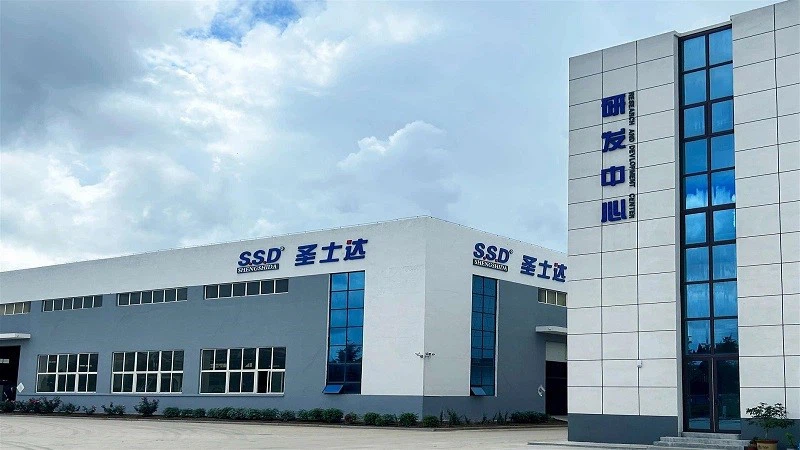
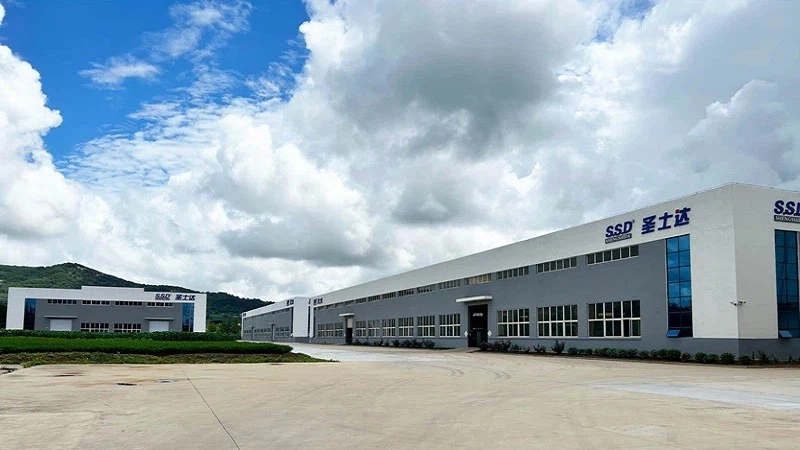
Our Factory
Qingdao Shengda Leading Machinery Tech Co., Ltd is(SDL) the export company of (S.S.D) Shandong Shengshida Tecnnology Co., Ltd.,SSD was established in 2005 and listed on the stock in 2015 (NEW Three Board)
The company is a national high-tech enterprise integrating research, design, manufacture of powder machinery and providing integrated solutions for powder production lines, the products mainly include mixers, extruders, cooling belts and grinding mills.
The sales volume of the company's equipment &production line have been awarded rank No.1 by National Powder Coating Industry Center, and actively participate in the formulation of industry standards. SDL &SSD are committed to the development of intelligent energy-saving emission reduction low-noise milling equipment and environmental dust removal equipment, our company's powder equipment has a total of nine series, fifty-eight products (automatic batching machine, mixer, metal powder bonding mixer, extruder, cooling belt, mill, automatic packaging line, laboratory powder production line, environmental dust removal equipment, coating equipment,formaldehyde-free adhesive equipment), selling in China, Europe, the United States, Russia, Japan and South Korea, the Middle East, Southea Since its establishment, the company has been based on the road of technological innovation, and has cooperated with Shandong University and Shandong University of Science and Technology in production, education and research. The company has 77 valid patents, 1 computer software copyright and intellectual property system certification, ISO9001 certification, ISO14001 certification, CE certification, explosion-proof certification, dual-soft certification and many other certifications.
SDL is committed to delivering sustainable, trustworthy, and reliable powder machinery and powder raw materials such as epoxy resin and polyester resin. We have been serving the industry for over 15 years, and our experience makes us a prominent manufacturer and supplier. Our top priority is customer satisfaction, and we strive to provide exceptional service and competitive pricing, establishing long-term partnerships with our clients for more than 30 countries. Our dedication to quality and eco-friendliness ensures that our customers receive nothing but the best. Let SDL be your reliable partner; we are here to help you succeed.
Certificate


FAQ
Hot Tags: container mixer, China container mixer manufacturers, suppliers, factory


